.png)
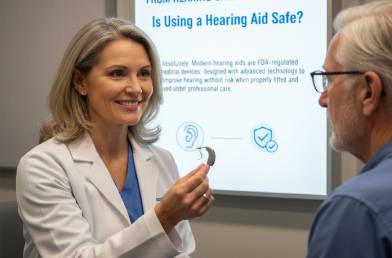
Expert Medical Guidance from Hearing Care Professionals
Hearing loss is a common yet often neglected health condition that can significantly impact communication, mental well-being, and overall quality of life. One of the most frequently asked questions at hearing clinics is:
“Is using a hearing aid safe?”
From a medical and clinical standpoint, the answer is yes. Hearing aids are safe, regulated medical devices that are designed to improve hearing without causing harm when prescribed and fitted by qualified professionals.
Understanding Hearing Aids as Medical Devices
Hearing aids are non-invasive electronic devices prescribed after a detailed hearing assessment. Modern digital hearing aids are engineered to:
Amplify sounds within safe decibel limits
Match the patient’s unique hearing loss profile
Protect the ear from sudden loud noises
All hearing aids used in clinical practice comply with international medical safety standards.
Are Hearing Aids Safe for Long-Term Use?
Clinically Proven Safety
When recommended by an ENT specialist or audiologist, hearing aids:
Do not damage hearing
Do not weaken natural hearing ability
Do not create dependency
In fact, untreated hearing loss poses a greater health risk than hearing aid usage, including increased chances of social isolation, depression, and cognitive decline.
Health Benefits of Using Hearing Aids
From a healthcare perspective, hearing aids provide multiple benefits:
Improved speech understanding
Reduced listening effort and fatigue
Better social engagement
Improved mental health and confidence
Lower risk of memory-related disorders in older adults
Early intervention with hearing aids is often associated with better long-term hearing outcomes.
Possible Initial Discomfort: Is It Normal?
Some patients may experience mild, temporary symptoms such as:
Ear fullness
Slight irritation
Sensitivity to sounds
These are normal adjustment responses and usually subside within a short period. Regular follow-ups ensure proper fitting and comfort.
Safety Guidelines for Hearing Aid Users
To ensure safe and effective use, we recommend:
Professional hearing evaluation before purchase
Custom programming by a certified audiologist
Routine cleaning and maintenance
Avoiding excessive moisture exposure
Periodic hearing and device check-ups
Are Hearing Aids Safe for Children and Senior Citizens?
Yes. Hearing aids are safe and effective for all age groups, including:
Children with congenital or early-onset hearing loss
Elderly patients with age-related (presbycusis) hearing loss
Specialized pediatric and geriatric fittings ensure maximum safety and benefit.
Our Medical Opinion
From a clinical standpoint, using a hearing aid is completely safe and medically advisable for individuals with hearing impairment. With professional diagnosis, proper fitting, and regular monitoring, hearing aids significantly improve hearing health and overall quality of life.
If you are experiencing hearing difficulties, timely consultation can prevent further complications.
Frequently Asked Questions (FAQs)
Is it safe to wear hearing aids every day?
Yes. Daily use is recommended for better hearing adaptation and improved communication.
Can hearing aids worsen hearing loss?
No. Properly programmed hearing aids operate within safe sound levels and protect residual hearing.
Do hearing aids cause ear infections?
Not when maintained properly. Good hygiene and correct fitting prevent infections.
Are hearing aids safe for long-term use?
Yes. Long-term use is medically safe and often beneficial.